

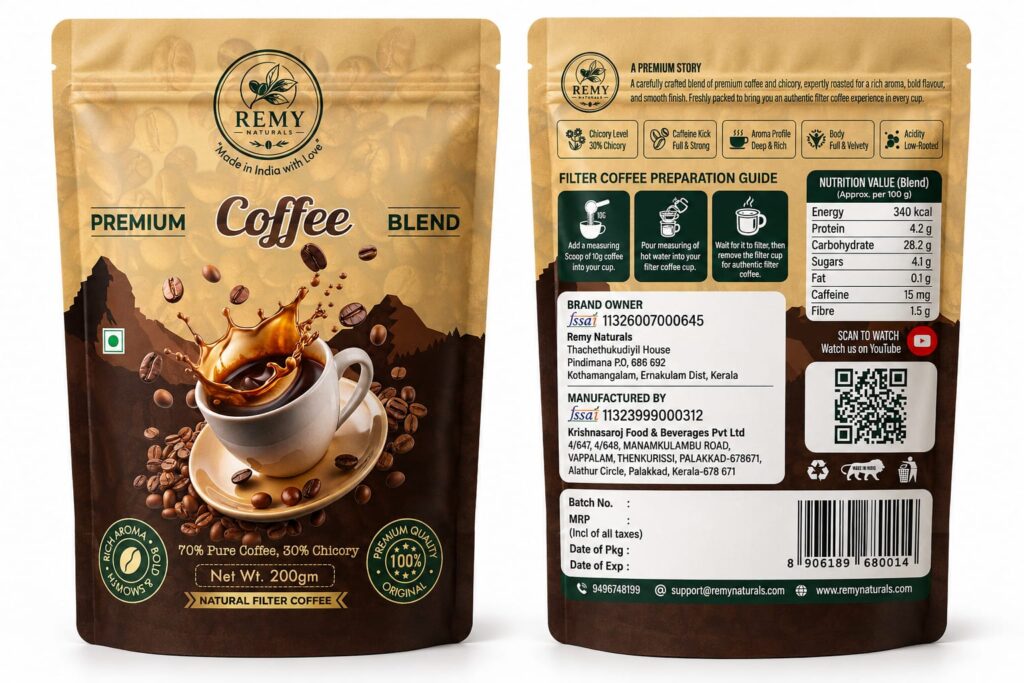
How to Prepare South Indian Filter Coffee at Home | Remy Naturals
How to Prepare Traditional South Indian Filter Coffee
Introduction
South Indian filter coffee is more than just a morning drink. For many families, it is a daily tradition that brings people together. The rich aroma of freshly brewed coffee, hot milk and the gentle sweetness of sugar create a comforting cup that is loved across South India.
Unlike instant coffee, traditional filter coffee is prepared by slowly brewing ground coffee through a metal coffee filter. The result is a strong and aromatic coffee decoction, which is then mixed with hot milk and sugar.
At Remy Naturals, we believe good coffee begins with good-quality coffee beans. With the right coffee powder, fresh milk and a little patience, you can prepare a delicious South Indian filter coffee in your own kitchen.
What Is South Indian Filter Coffee?
South Indian filter coffee is traditionally made using a stainless-steel coffee filter. The filter has two sections. The upper section holds the coffee powder and hot water, while the lower section collects the brewed coffee decoction.
The coffee powder is usually made from roasted and ground coffee beans. Some traditional South Indian coffee blends also contain chicory, which can add body, colour and a distinctive taste.
The strength and taste of the final coffee depend on the coffee blend, roasting, grinding, brewing time and the amount of milk used.
Ingredients You Need
For approximately 2 cups of South Indian filter coffee, you will need:
- 3 tablespoons coffee powder
- 150–200 ml hot water
- 250–300 ml fresh milk
- Sugar according to taste
- A traditional South Indian coffee filter
- A small saucepan
- A stainless-steel tumbler and davara, if available
For a stronger cup, you can adjust the amount of coffee powder according to your preference.
Step 1: Prepare the Coffee Filter
First, clean and dry your stainless-steel coffee filter.
Place the upper section of the filter securely over the lower container. Add approximately 3 tablespoons of freshly ground coffee powder into the upper chamber.
Do not press the coffee powder too tightly. Gently level it using the filter’s pressing disc.
The correct amount of pressure is important. If the coffee powder is packed too tightly, the water may take too long to pass through. If it is too loose, the decoction may become weak.
Step 2: Add Hot Water
Heat fresh drinking water until it is very hot.
Slowly pour approximately 150–200 ml of hot water over the coffee powder.
Close the filter with its lid.
Now comes the most important part: wait patiently.
The hot water will slowly pass through the coffee powder and collect in the lower chamber as a dark, aromatic coffee decoction.
This process can take several minutes.
Step 3: Allow the Decoction to Brew
Do not shake the filter or disturb it while the coffee is brewing.
A good decoction should be concentrated, aromatic and dark in colour.
The brewing time can vary depending on the coffee powder, grind size and filter. If you want stronger coffee, you can prepare a more concentrated decoction.
Freshly brewed decoction gives South Indian filter coffee its characteristic aroma and flavour.
Step 4: Heat the Milk
While the coffee is brewing, heat fresh milk in a saucepan.
Bring the milk to a gentle boil and then keep it hot.
For a creamy cup of filter coffee, full-fat milk can be used. You can adjust the amount of milk depending on whether you prefer strong or mild coffee.
Step 5: Add Sugar
Add sugar to your serving tumbler according to your taste.
Some people prefer lightly sweetened coffee, while others enjoy a sweeter cup.
You can also add the sugar directly to the hot milk.
Step 6: Mix the Coffee Decoction and Milk
Now pour the freshly prepared coffee decoction into the hot milk.
A simple starting ratio is:
1 part coffee decoction + 2 to 3 parts hot milk
You can change this ratio depending on your preferred strength.
For stronger coffee, use more decoction. For a milder cup, increase the amount of milk.
Step 7: The Traditional Coffee Pour
One of the most enjoyable parts of South Indian filter coffee is the traditional pouring method.
Pour the coffee between the stainless-steel tumbler and the davara several times.
This helps mix the coffee and milk while creating a light layer of foam on top.
Be careful while handling very hot coffee.
Your South Indian filter coffee is now ready to serve.
How to Make Strong Filter Coffee
If you prefer a stronger cup, try these simple tips:
- Use freshly roasted and ground coffee powder.
- Keep the coffee-to-water ratio slightly higher.
- Prepare a concentrated decoction.
- Do not add too much milk.
- Serve the coffee immediately after preparation.
The quality of the coffee powder makes a major difference to the final taste.
How to Make Mild Filter Coffee
For a lighter cup, use a smaller amount of decoction and more hot milk.
You can also reduce the amount of coffee powder slightly when preparing the decoction.
The beauty of South Indian filter coffee is that you can adjust the strength to suit your personal taste.
Why Fresh Coffee Powder Matters
Coffee is an aromatic product, and freshness plays an important role in its flavour.
Freshly roasted and properly ground coffee can provide a more enjoyable aroma and taste than coffee that has been stored for a long period.
Store your coffee powder in a clean, dry, airtight container away from moisture, heat and direct sunlight.
Always use a clean, dry spoon when taking coffee powder from the container.
Remy Naturals South Indian Coffee Experience
At Remy Naturals, our aim is to bring the familiar taste and aroma of quality coffee into everyday homes.
Whether you enjoy your coffee strong in the morning or mild in the evening, the right brewing method can make a significant difference.
Our coffee can be prepared using a traditional South Indian filter to create a rich and aromatic coffee decoction.
The simple combination of freshly prepared coffee, hot milk and sugar can turn an ordinary morning into a comforting coffee moment.
South Indian Filter Coffee: Simple Recipe
Here is the complete recipe at a glance:
Coffee powder: 3 tablespoons
Hot water: 150–200 ml
Milk: 250–300 ml
Sugar: According to taste
Method
- Add coffee powder to the upper chamber of the filter.
- Gently level the powder.
- Pour hot water into the filter.
- Close the lid and allow the decoction to brew.
- Heat fresh milk.
- Add sugar according to taste.
- Mix the coffee decoction with hot milk.
- Pour between the tumbler and davara to create a light foam.
- Serve hot.
Enjoy Your Coffee the South Indian Way
South Indian filter coffee is simple, but its preparation is a small ritual. From opening a fresh packet of coffee powder to waiting for the decoction and finally pouring the hot coffee into a stainless-steel tumbler, every step contributes to the experience.
For coffee lovers, the aroma itself can become part of the morning routine.
Brew slowly. Pour traditionally. Enjoy every sip.
Frequently Asked Questions
1. Can I make South Indian filter coffee without a traditional filter?
Yes. A traditional filter gives the classic brewing experience, but other coffee-brewing methods can also be used. However, the flavour and strength may be different.
2. How much coffee powder should I use?
For two cups, around 3 tablespoons is a useful starting point. You can increase or decrease the quantity according to your preferred strength.
3. How long should the coffee decoction take?
It generally takes several minutes for the hot water to pass slowly through the coffee powder. The exact time depends on the coffee powder and filter.
4. Can I drink filter coffee without sugar?
Yes. You can enjoy filter coffee without sugar if you prefer a less sweet taste.
5. Can I use only Arabica coffee?
Yes. A 100% Arabica coffee can be used to prepare filter coffee. It can
Crafting Informative and Cohesive Body Content
Within the body of your blog post lies the heart of your message. Break down your content into coherent sections, each with a clear heading that guides readers through the narrative. Dive deep into each subtopic, providing valuable insights, data, and relatable examples. Maintain a logical flow between paragraphs using transitions, ensuring that each point naturally progresses to the next. By structuring your body content effectively, you keep readers engaged and eager to learn more.
Powerful Closures: Leaving a Lasting Impression
Concluding your blog post isn’t just about wrapping things up – it’s your final opportunity to leave a strong impact. Summarize the key takeaways from your post, reinforcing your main points. If relevant, provide actionable solutions or thought-provoking questions to keep readers thinking beyond the post. Encourage engagement by inviting comments, questions, or sharing. A well-crafted conclusion should linger in your readers’ minds, inspiring them to explore further or apply what they’ve learned.
